Books by Rene Philippe Raymond Dubout
More than thirty years of advising foreign investors and property buyers in Asia and Europe — turned into practical guides.
Nine books. One rule: ask before you sign.
What Nobody Tells You
What Nobody Tells You is a series of practical guides for people who move their money, their business or their life to another country. Each book draws on more than thirty years of real cases — including the author’s own mistakes — and asks the questions nobody asks until it is too late.
These are not legal guides to one country: laws change, but the questions remain. Every chapter ends with a checklist or decision table to take to your lawyer before you sign, pay or move. The books are grouped by theme below: the books in each theme are written to be read together.
Investing and Doing Business Abroad
Moving your money, your business or your family to another country: setting up, buying property, buying or selling a company.
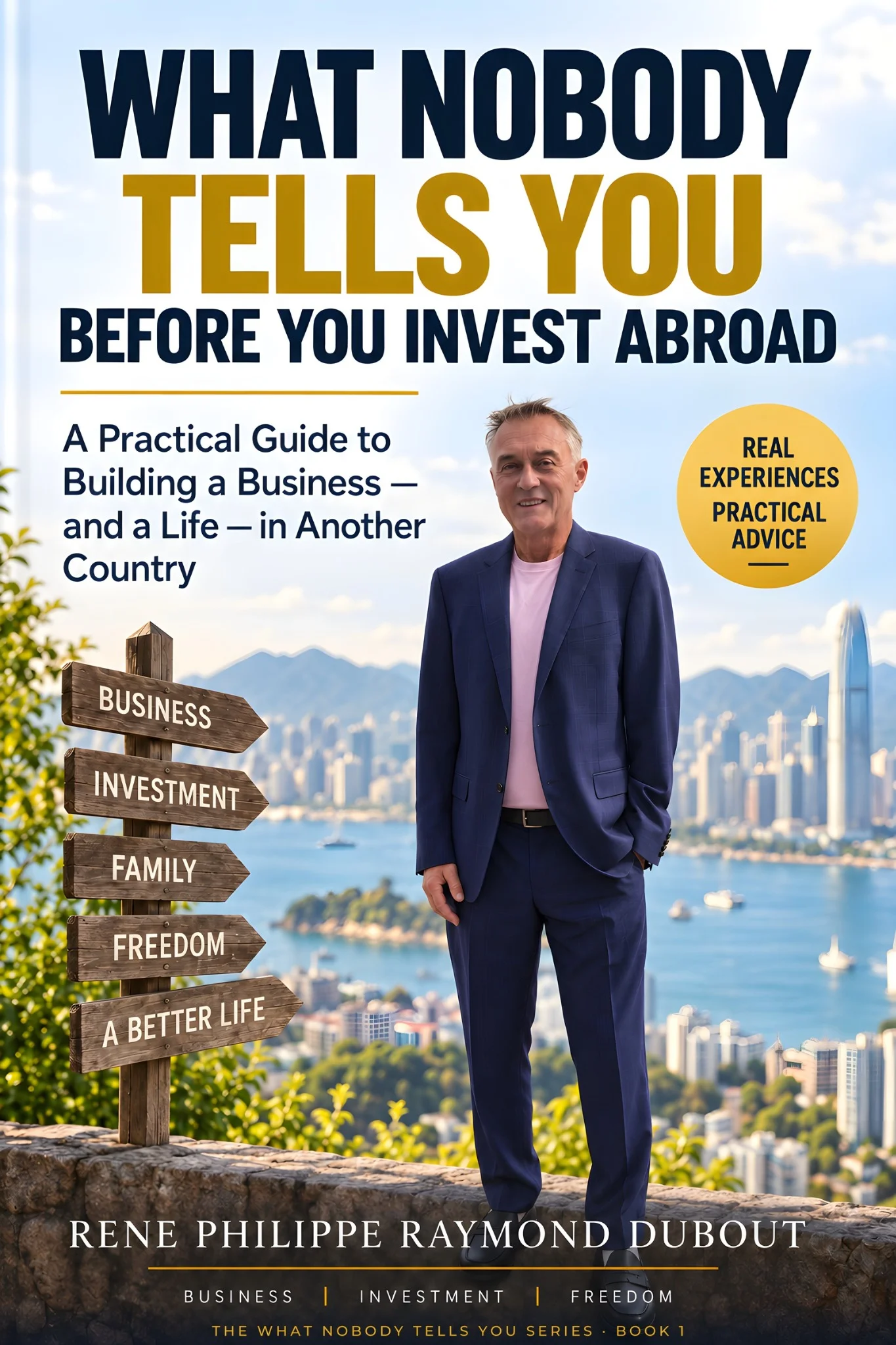
What Nobody Tells You Before You Invest Abroad
A Practical Guide to Building a Business — and a Life — in Another Country
For entrepreneurs who move their money, their business and their family abroad. Every chapter ends with a decision table.
Read the full book description
Moving your money, your business and your family to another country is not just an investment decision. It is a life decision.
This is not a legal guide. It is not a tax manual. It is a book about what actually happens when an entrepreneur takes his savings, his business and sometimes his whole life abroad — and about the questions that can destroy an investment long before anyone reads the law.
Can you actually invest in that sector? Can you legally work in your own company? How much money will you really need? What happens if your local partner turns against you, if your accountant follows a bad instruction, if your bank asks you to prove where money you earned twenty years ago came from? And what happens if the investment works, but your life doesn’t?
Drawing on more than thirty years of helping foreign investors establish, operate and exit businesses in Southeast Asia and Europe — including the mistakes he made himself — lawyer Rene Philippe Raymond Dubout walks through the decisions in the order they really arise, from choosing the country to planning the exit. Every chapter ends with a decision table you can use before committing money, moving your family or signing with a partner. All the decision tables are also available as a fillable companion workbook.
The country changes. The questions remain.
Available now on Apple Books and Amazon. Google Play will be activated when that edition goes live.
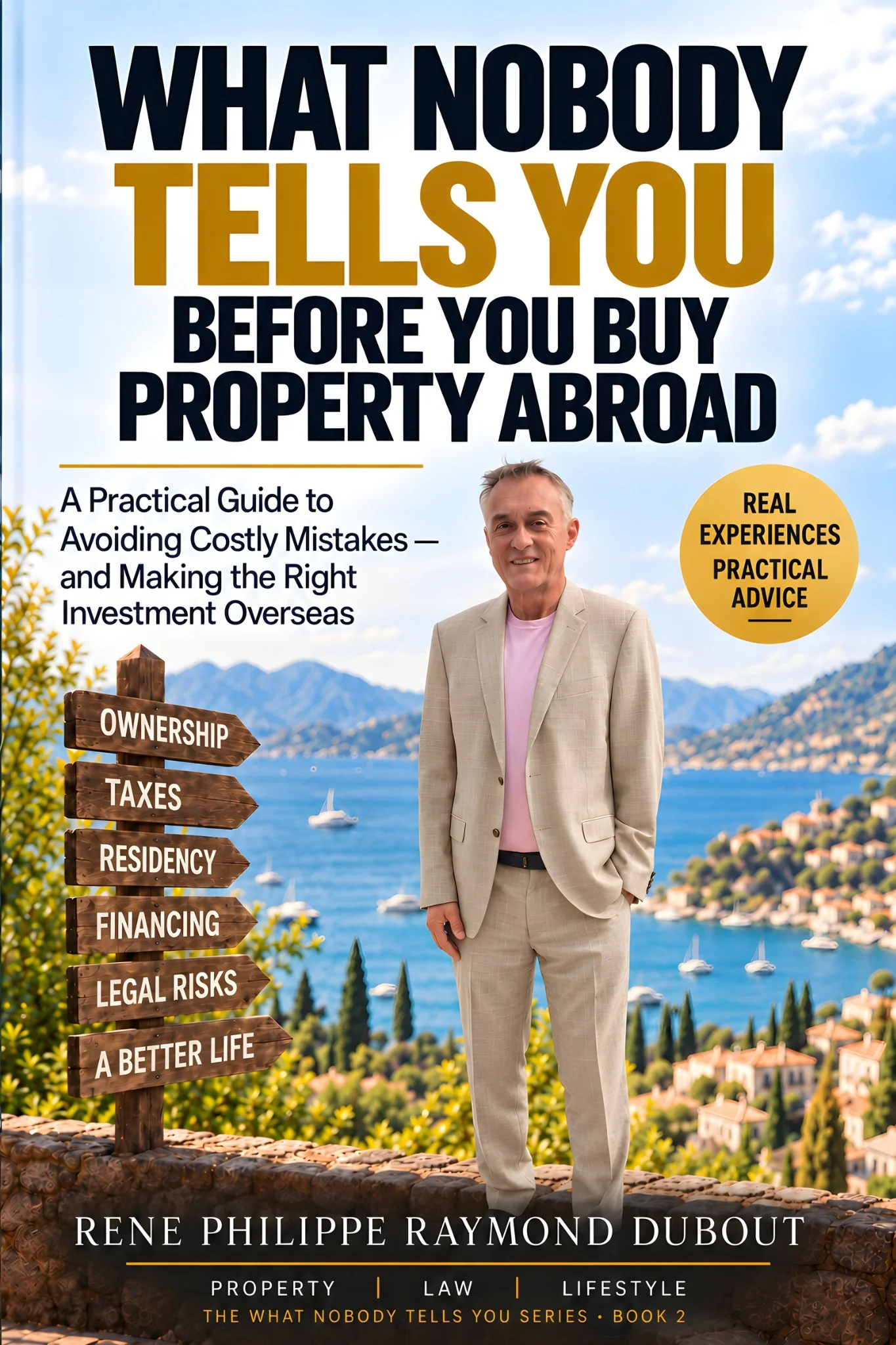
What Nobody Tells You Before You Buy Property Abroad
A Practical Guide to Avoiding Costly Mistakes — and Making the Right Investment Overseas
For anyone buying property in any country. The questions every foreign buyer must ask, with a field checklist in every chapter.
Read the full book description
The villa is beautiful. The sunset is real. The agent is charming. And nobody has told you who actually owns the land.
Every year, thousands of people buy a home, a retirement apartment or an investment property in a country that is not their own. They check the view, the price and the pool. Far fewer check the title, the developer’s finances, the payment schedule, the owners’ association — or how they will ever get their money out. This book is about the questions they should have asked.
Drawing on more than thirty years of advising foreign buyers in Thailand — and on his own experience of buying off plan in a project that stopped — lawyer Rene Philippe Raymond Dubout shows what really goes wrong: titles that are not what they seem, roads that are too narrow for the building they serve, nominee structures that collapse under investigation, leases sold as ownership, developers building with your money, currency bets nobody explained. Every chapter ends with a field checklist you can take to your lawyer.
This is not a legal guide to any one country. It is a guide to the questions that apply in every country. Laws change. The questions remain.
Available now on Apple Books, Amazon and Google Play.
Once you are settled abroad: buying a company there, or selling the one you built.
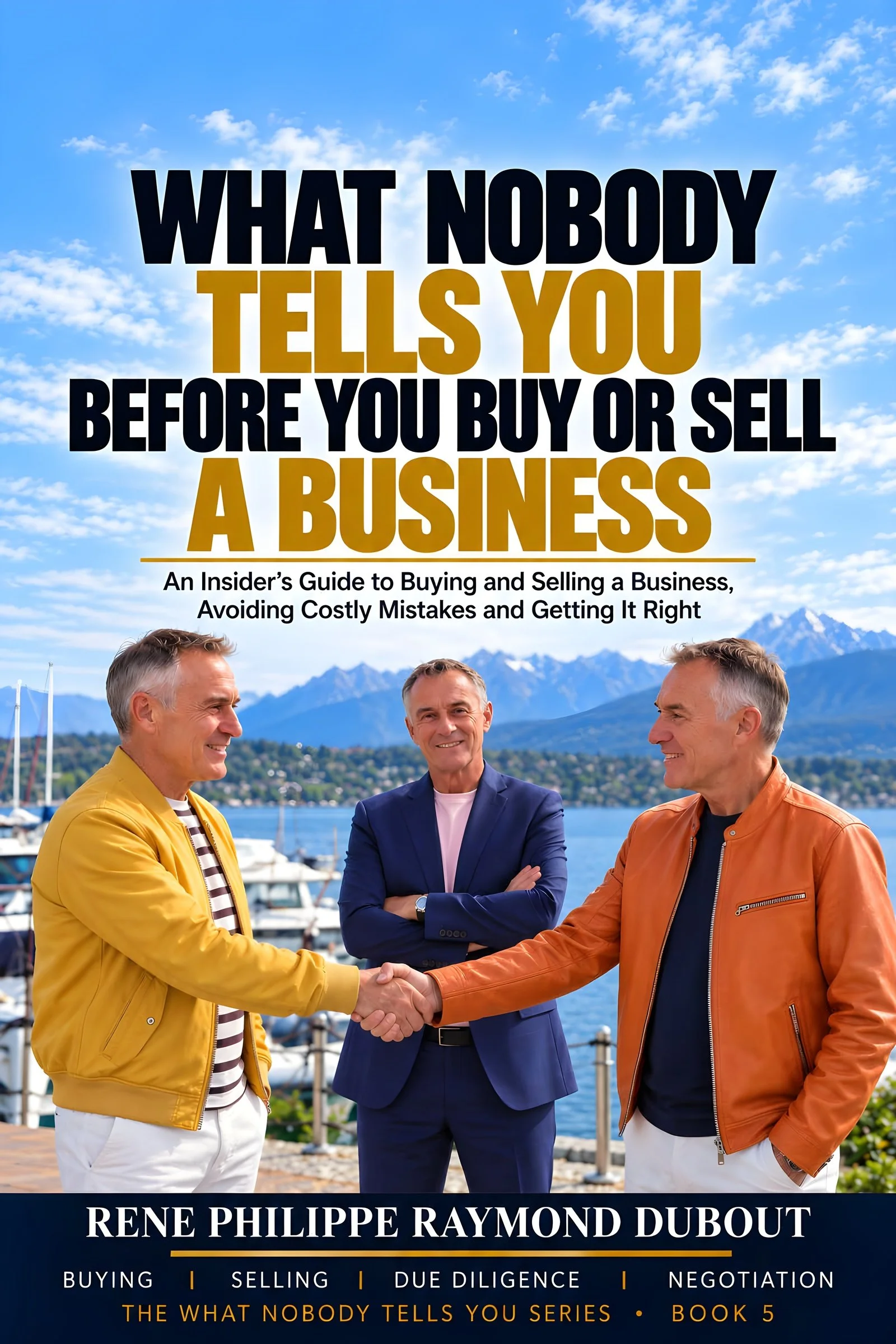
What Nobody Tells You Before You Buy or Sell a Business
This is not a book about nine-figure mergers.
An insider’s guide for people putting their own money on the table: the questions to ask before you buy or sell a business, and the mistakes that ruin small deals.
Read the full book description
Most books on mergers and acquisitions are written for bankers, about theoretical valuations and deals worth hundreds of millions. This one is written for people who are putting their own money on the table: €300,000, €2 million, often the savings of a lifetime. For them, one mistake is not a write-off. It can ruin them.
And the mistakes that ruin them are rarely financial engineering. They are the seller who held everything together and leaves, the key customers who follow him, the lease nobody read, the cash that runs out three months after closing.
This book is for the individual buyer, the executive who wants to be his own boss, the small company making its first acquisition, and the owner who wants to sell without being taken apart. It does not teach you to become a lawyer or an accountant. It teaches you the questions to ask before you sign. Every chapter looks at the deal from the buyer’s side first, then from the seller’s, and ends with a decision table.
Inside the book
- Are you the right buyer for this business, and why is the seller really selling?
- What exactly are you buying, and what will still be there the morning after?
- What “five times EBITDA” really means, with a worked example
- Due diligence that matters: the lease, the licences, the key people, the real numbers
- How the price is really paid: earn-outs, escrow, seller financing, shares
- Structure and tax for buyers abroad, and the offshore myths that cost money
- The first hundred days, and what to do when it goes wrong after closing
- The risks no contract covers: nature, politics and the country itself
Rene Philippe Raymond Dubout has spent more than thirty years on both sides of these deals, in Europe and Asia. He tells you what went right, what went wrong, and what nobody tells you.
Book 5 of the What Nobody Tells You series, after What Nobody Tells You Before You Invest Abroad, Before You Buy Property Abroad, Before You Buy a Bank and About Investing in Crypto.
Available now on Apple Books, Amazon and Google Play.
Banks and Financial Licences
Owning a regulated financial business: buying or building a bank, and the Swiss SRO route for payments, crypto and advisers.
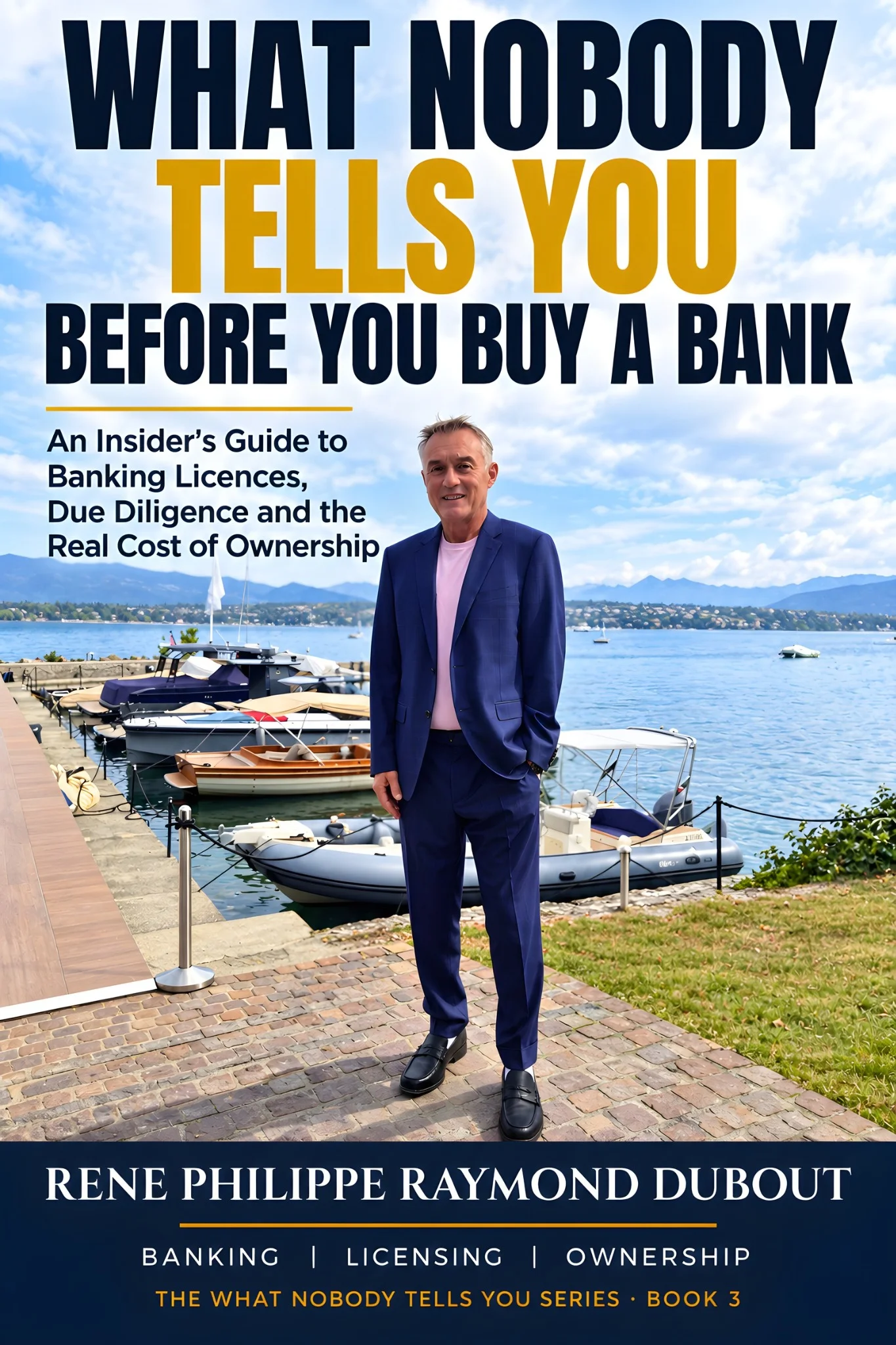
What Nobody Tells You Before You Buy a Bank
Getting the licence is the easy part. Turning it into a bank is where the money disappears.
Buying a bank is not the same as getting a licence. This practical guide explains the capital, payment rails, jurisdictions and questions to answer before you wire the funds.
Read the full book description
Every year, investors, family offices and fintech founders buy or build a bank, in the Caribbean, Monaco or Switzerland. They celebrate the regulator’s approval—then discover that no one will clear their payments.
A licence is not a bank. It is permission to start building one. Without a correspondent bank, working payment rails and enough cash to survive until break-even, it is an expensive certificate. Drawing on thirty years of building, selling, buying and evaluating banks, Rene Philippe Raymond Dubout explains the real prices, real timelines and the moments when a buyer should walk away.
Inside the book
- Why a regulator can license you but cannot force a single bank to bank you
- Capital versus runway—the mistake that ruins new bank owners
- What it really costs, from a few million dollars offshore to CHF 30 million and more in Switzerland
- Thirteen jurisdictions compared, from Cayman and Dominica to Monaco, Liechtenstein and Switzerland
- How banks fail, and what each failure teaches a buyer
- The 20 questions to answer before you sign
Read it before you wire the funds.
Available now on Apple Books, Amazon and Google Play.
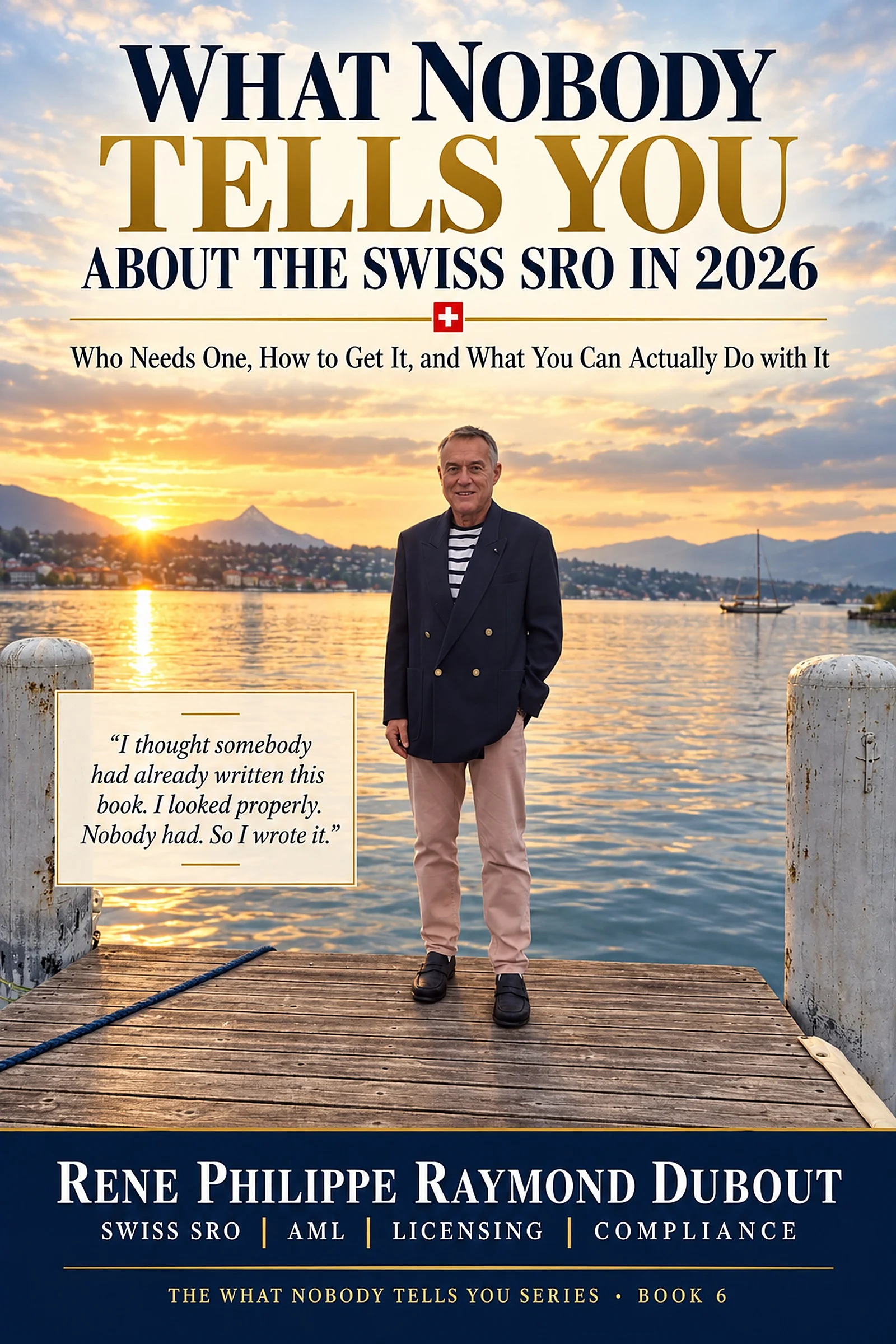
What Nobody Tells You About the Swiss SRO in 2026
An SRO membership is not a universal financial licence. But it can do far more than most people think.
The complete guide to the Swiss self-regulatory organisation in 2026: who must join, how to get admitted, and thirteen business models examined one by one, from crypto and gold to payments, escrow and lending.
Read the full book description
Since 1 October 2026, the Swiss self-regulatory organisation (SRO) is no longer only for payment companies, currency exchanges and crypto businesses. The revised Anti-Money Laundering Act also covers certain advisers: lawyers, fiduciaries, company formation and domiciliation providers and real estate professionals who take part in certain transactions. Those already active must apply to an SRO before 1 December 2026.
The first four parts explain the system: what an SRO really is, who must join, what the application file must contain, piece by piece, and what happens after admission: the annual audit, the bank account problem, the crypto rules, the coming reform, and how to buy an existing SRO company without buying its problems.
The fifth part takes thirteen business models one by one: crypto exchange, custody, stablecoins, gold, art and freeports, tokenisation, international payments, merchant services, escrow, lending, crowdfunding, trade finance, and the businesses that sit next to finance. For each one, it asks the questions that matter. Where does the money go? Who is the client’s counterparty? Is an SRO enough, or do you need a FINMA licence? What will the reform change?
Every chapter ends with six things to remember and a decision table. At the end: the whole SRO file on one page, as a checklist.
Inside the book
- SRO or FINMA licence: where the line really runs
- New since 1 October 2026: advisers too, and the 1 December 2026 deadline
- Can you be admitted? The checks on directors and shareholders
- The application file, piece by piece, with realistic budgets and timelines
- The annual audit, the bank account problem and crypto
- Buying an SRO company: what to check before you pay
- Thirteen business models, from crypto and gold to payments, escrow and lending
- The coming FINMA licences for crypto institutions and payment instrument institutions
Available now on Apple Books, Amazon (Kindle) and Google Play. The paperback edition will be activated when it goes live.
Crypto: Keeping What You Own
Two sides of the same money: what you can lose when you invest in crypto, and what can stop you using it even when you still own it.
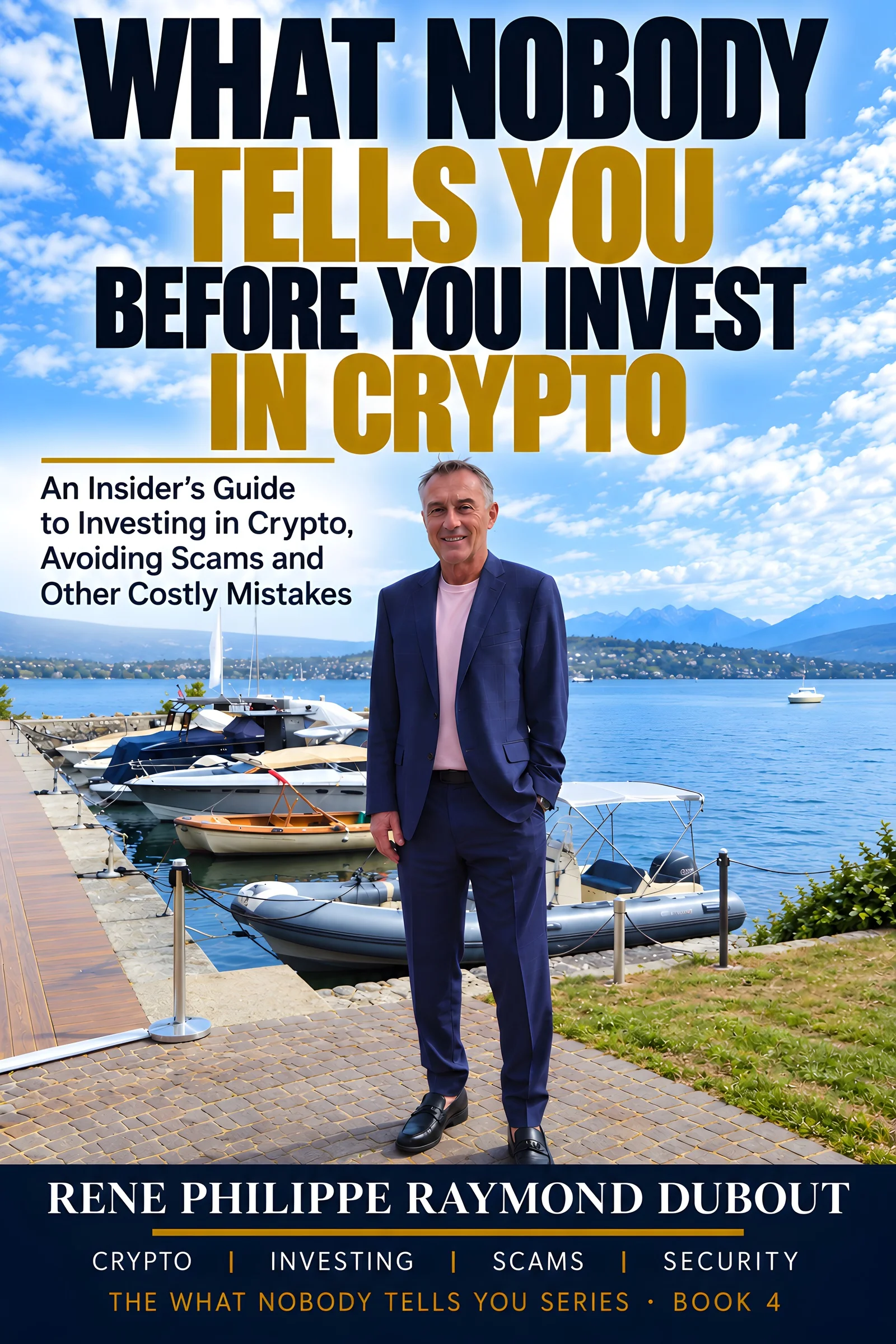
What Nobody Tells You Before You Invest in Crypto
Crypto is easy to buy and hard to exit with your money intact.
A plain-language guide to the crashes, scams, tax traps, custody risks and inheritance questions that ordinary investors face.
Read the full book description
Getting into crypto takes five minutes and a payment card. Getting out, with your money, is where the trouble starts.
Every cycle, a new wave of ordinary investors buys Bitcoin because the price is rising and sells because it is falling. The chart recovers. They do not. The Bank for International Settlements found that most retail buyers lost money in the very years the price multiplied. That is not bad luck. It is the gap between the asset and the investor, and nobody explains it before you buy.
This book does. Written for Mr. Everybody rather than the trader or the technologist, it follows the money from the first purchase to the day you try to put the gains back in a bank: the crashes of 77 to 94 per cent, the exchanges that lost their customers’ coins, the lenders who bet your deposits on a rising market, the scams built around a friendly voice, the yield that somebody else is paying, the tax bill on a token you never sold, and the question almost nobody asks: who gets your crypto when you die?
The author has spent more than twelve years building the things this book warns you about. He has never bought a Bitcoin. There is nothing here to sell you and no loss to avenge: just what happens, in plain words, with a decision table at the end of every chapter.
Inside the book
- Why the return of an asset is not the return of the people who buy it
- Mt. Gox, Terra, Celsius, FTX: what failed, and what you could have seen
- How your bank reacts when crypto profits arrive in your account
- Getting your money back is not getting your performance back
- Pig butchering, rug pulls, deepfakes, and the second scam that follows the first
- Where yield really comes from, and what “stable” does not mean
- Exchange, custodian or your own keys, and what happens to them when you are gone
Book 4 of the What Nobody Tells You series, after What Nobody Tells You Before You Invest Abroad, Before You Buy Property Abroad and Before You Buy a Bank.
Available now on Apple Books, Amazon and Google Play.
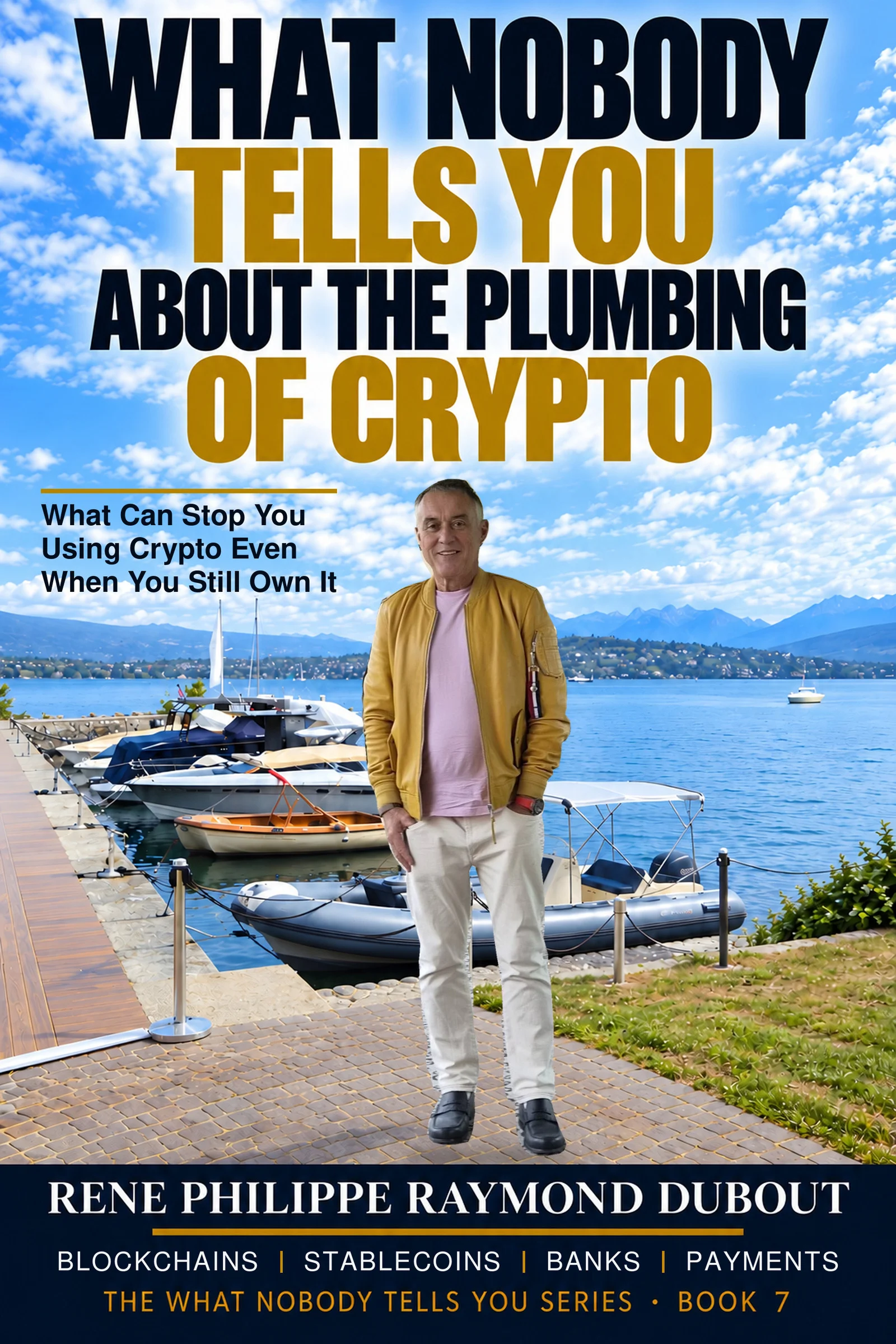
What Nobody Tells You About the Plumbing of Crypto
Your crypto wallet says you’re rich. Wonderful. Now try spending the money when the network stops working.
Your coins can be perfectly safe and still be unusable. This is the plumbing behind crypto — miners, validators, stablecoin issuers, banks, bridges and oracles — and what happens to your 20,000 euros when one of those parts stops working.
Read the full book description
Most crypto books tell you what can be stolen from you. This one is about what can stop you using money nobody has stolen.
Your coins can sit safely on the blockchain, your keys can be perfectly secure, and you can still be unable to sell, move or spend a single euro of them. A blockchain halts for hours. An exchange freezes your account. The bank behind your stablecoin closes on a Friday. A bridge goes down. A wallet app disappears from the store. None of that is theft, and all of it costs you the same thing: access.
This is the plumbing: the miners, validators, issuers, banks, bridges and oracles that sit between you and your money. It is invisible when it works, and it is the whole story when it doesn’t.
Twenty chapters follow the same 20,000 euros from one failure to the next: what breaks, who decides when it gets fixed, how long that takes, and what you can actually do about it. Real incidents, dated and sourced. Stress scenarios that show where the limits are. And the longer-term risks, including the one I did not expect to be writing about: what happens if an artificial intelligence goes after the networks themselves.
Inside the book
- Who pays to keep Bitcoin secure once the subsidy shrinks, and why that question belongs to long-term holders
- What happens when a blockchain simply stops, and who decides when it starts again
- What happens when everybody wants to move their crypto on the same day
- Where the money behind a stablecoin actually sits, and what happened when one of its banks failed
- Redeeming is not selling: the door most holders have never tested
- Your crypto is fine — but can you still get back to a bank account?
- Who really controls a decentralised blockchain, and what it runs on
- Can someone freeze your crypto, and who exactly can do it
- Bridges, oracles and wallet apps: the parts nobody mentions until they break
- When someone else’s crypto becomes your problem
- Correlated failures, quantum computers, and the day a machine goes after the network itself
I have never owned a Bitcoin. I have spent years working on the pipes crypto runs through, and I once refused to be paid in one. It reached me anyway, through somebody else, and then it froze. That story is in Chapter 16.
A companion to What Nobody Tells You Before You Invest in Crypto.
Available now on Apple Books, Google Play and Amazon (paperback).
How to Safely Buy Real Estate in Thailand (Third Edition)
How to Safely Buy Real Estate in Thailand is the complete guide for foreigners buying property in Thailand, now in its third edition. It began in 2009 with a book that became a finalist in the USA Best Book Awards and was completely updated, chapter by chapter, in September 2026.
Volume I, The Buyer’s Guide, covers the practical side: developers, off-plan purchases, title deeds, leases, agents, financing and visas. Volume II, The Law, explains what a foreigner can legally own: land documents, companies and nominees, condominiums, the 49% quota and taxes. Buying in Thailand? Start here. Buying anywhere else? Read What Nobody Tells You Before You Buy Property Abroad.
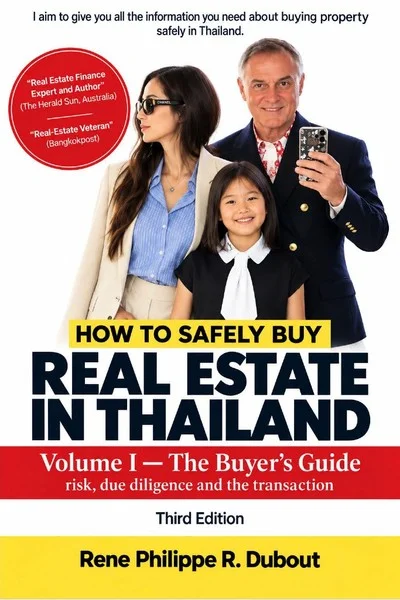
Volume I — The Buyer’s Guide
Risk, Due Diligence and the Transaction
The practical side of buying in Thailand: developers, off-plan purchases, title deeds, leases, agents, financing and visas.
Available now on Apple Books. Amazon and Google Play buttons will be activated when those editions go live.
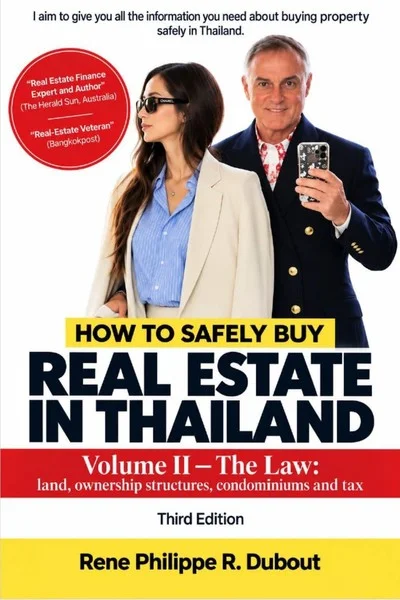
Volume II — The Law
Land, Ownership Structures, Condominiums and Tax
What a foreigner can legally own in Thailand: land documents, companies and nominees, condominiums, the 49% quota, leases and taxes.
Available now on Apple Books. Amazon and Google Play buttons will be activated when those editions go live.